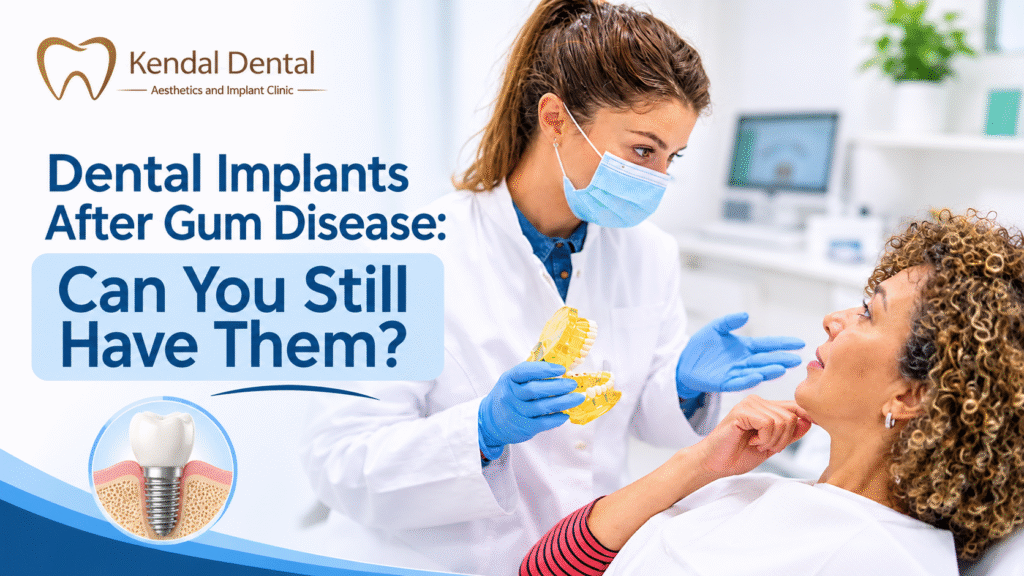
Gum disease is one of the main reasons adults lose teeth in the UK. So, if it has cost you a tooth, you may want a strong, natural-looking way to fill the gap. Dental implants often top the list. However, many people ask the same question: can I still have implants after gum disease? The good news is that the answer is often yes. In this guide, we explain why.
What Is Gum Disease?
Gum disease starts when plaque builds up along your gum line. Plaque is a sticky layer full of germs. At first, it makes your gums red, sore or prone to bleeding. Dentists call this early stage gingivitis.
If you leave it, gum disease can get worse. Then, it can attack the bone that holds your teeth in place. Dentists call this stage periodontitis. Over time, your teeth may become loose. In some cases, they fall out or need to come out.
Why Gum Disease Matters for Implants
A dental implant is a small titanium post. Your dentist places it in your jawbone. Over a few months, the bone grows around the post and holds it firmly. Then, your dentist fits a crown on top.
For this reason, implants need two things to succeed. First, they need healthy gums around them. Second, they need enough strong bone beneath them. Gum disease can damage both. As a result, your dentist must check your mouth carefully before they suggest treatment.
Can You Have Implants After Gum Disease?
In many cases, yes. Gum disease does not rule out implants on its own. Instead, the key is to bring the disease under control first.
Your dentist will want your gums to look healthy and stable. They will also want to see that you can keep them that way. Once this happens, implants often become a good option again.
However, active gum disease is a different matter. If you still have infection in your gums, implants carry a higher risk. So, your dentist will treat the problem before they place anything new.
Step 1: Treat the Gum Disease
First, your dentist or hygienist will clean your teeth deeply. They will remove plaque and hard tartar from above and below the gum line.
Next, they will show you how to clean your teeth well at home. For example, they may suggest interdental brushes for the gaps between your teeth. Finally, they will check your gums again after a few weeks to see how they have healed.
Step 2: Check Your Bone
Gum disease often shrinks the bone in your jaw. Therefore, your dentist will take X-rays or a 3D scan. These images show how much bone you have left.
If you have plenty, you may move straight on to implant treatment. On the other hand, you may not have enough bone. In that case, your dentist may suggest a bone graft. This adds new bone to the area. After it heals, it can give your implant a solid base.
Step 3: Plan Your Implant
Once your gums and bone look ready, your dentist will plan your treatment. They will talk you through each stage. They will also explain how long healing should take.
Are There Extra Risks?
Yes, people with a history of gum disease face a slightly higher risk of problems. The main one is peri-implantitis. This works much like gum disease, but it affects the gums and bone around an implant instead.
Still, you can lower this risk a great deal. Simply follow a few healthy habits:
- Brush twice a day with fluoride toothpaste.
- Clean between your teeth every day.
- Visit your hygienist on a regular basis.
- Go to every dental check-up.
- Stop smoking, as it slows healing and harms your gums.
Also, if you have diabetes, try to keep it well controlled. Good blood sugar levels help your gums heal and stay healthy.
How to Look After Your Implants
After treatment, your implants need the same daily care as natural teeth. Plaque can still build up around them. So, keep up your cleaning routine every single day.
Your hygienist can also clean around your implants with special tools. Because of this, regular visits really matter. They help your dentist spot early signs of trouble before they grow.
Dental Implants at Kendal Dental Aesthetics and Implant Clinic
At Kendal Dental Aesthetics and Implant Clinic, we help patients in Kendal and across Cumbria restore their smiles after gum disease. First, we check your gums and bone with care. Then, we treat any active gum disease and plan your implants step by step.
Book a consultation with our friendly team today. Together, we can find out whether dental implants suit you and help you smile with confidence again.
Also Read:https://kendaldentist.uk/what-are-all-on-4-dental-implants/